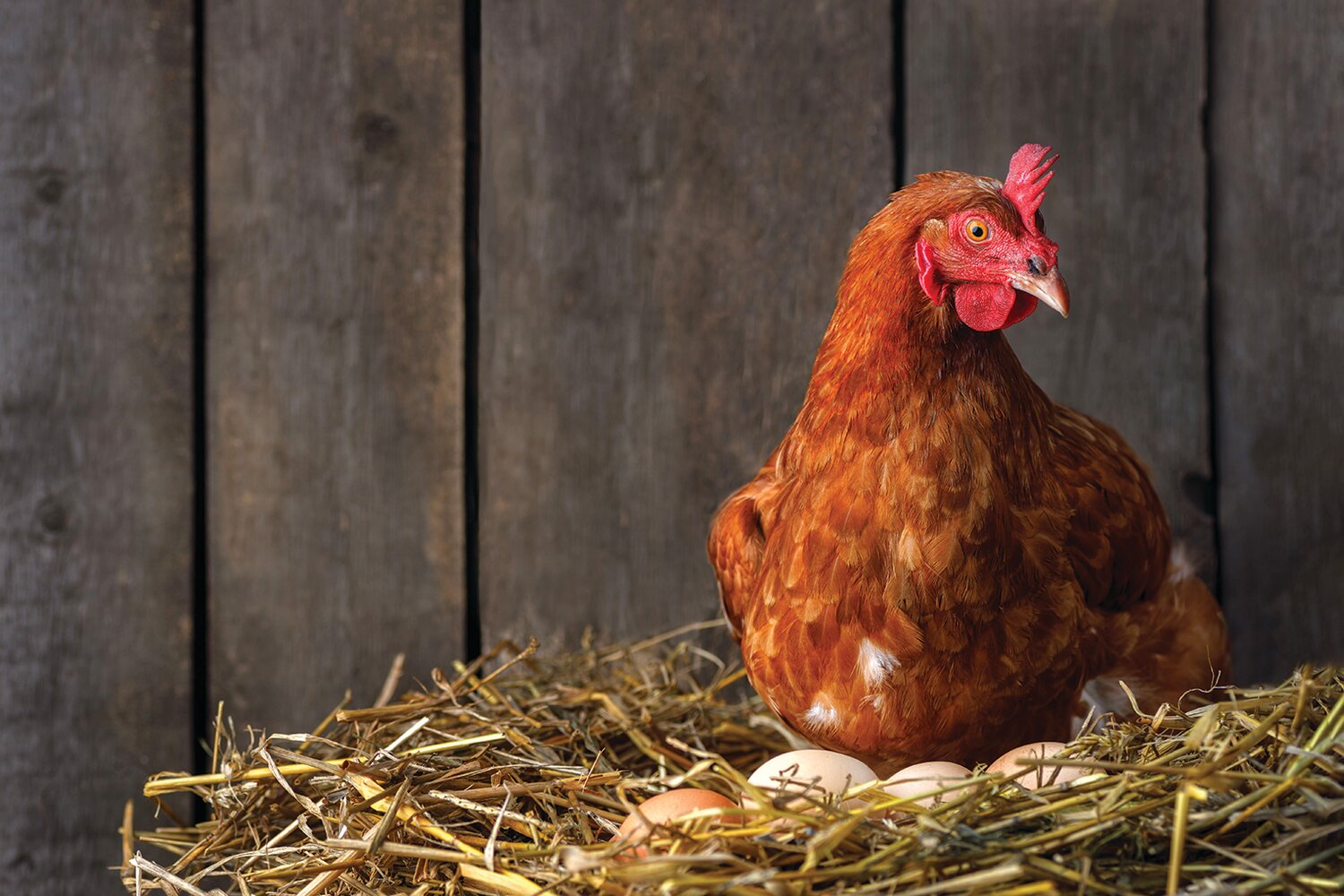
There have been periodic questions raised over the years about whether residents can raise chickens in residentially zoned districts. Since 2004, the current Wanamingo Code of Ordinances only allows for farm animals to be kept on residential lots of at least 10 acres. Chickens are allowed in Agricultural Zoned Districts within the City. The reasoning being that farm animals should be kept on agriculturally zoned areas, large residential parcels, or in the surrounding townships (out in the country). There are a handful of citizens who like the idea of raising chickens in town. However, a significant number of residents when asked, do not wish to see chickens raised within residential districts. For many of us, actually having chickens on our property is a moot point, (because of space requirements), but this discussion has come up many times since I moved here, so I thought it was time to get all the relative information, lay it out, and get the facts.
The concerns regarding the keeping of chickens in residential districts include site, sounds, smells of animals, and public nuisance complaints. Another concern includes attracting pests such as raccoons, foxes, opossums, and coyotes to residential neighborhoods. Neighbors living in urban areas have the right to enjoy their property. Chickens can be noisy, including both roosters and hens. There is an odor associated with chicken manure that can affect neighbors. There are chicken manure concerns beyond smell that include spreading diseases such as bacteria and viruses (including Salmonella, E. coli, Campylobacter, and avian influenza). Concentrations of chicken manure can turn yards brown from high nitrates. Raising chickens can sound idealistic to those interested. However, the realities of the work to reward can be daunting to those ill-equipped for the task. These ill-equipped residents tend to give up on their chicken raising project which neighbors pay for through the chicken maintenance neglect (killing or abandoning chickens).
There is a mix of communities in Minnesota that do and do not allow chickens, along with very little or very strict regulations in residentially zoned districts. Zumbrota, Pine Island, Goodhue, and Cannon Falls allow chickens in residential districts, but have varied regulations and defined restrictions that follow a strict permit registration process, including yearly fees. These permits require the chicken owners to consent to regular City Staff inspections to ensure regulations are followed. In each case the chickens must be kept in a clean and sanitary manner that is not a nuisance to, or detrimental to the public health, safety and welfare of the community. If the chicken owner does not follow the strict guidelines and restrictions, the permits can be revoked and not allowed to be renewed. This is great in practice, but can lead to significant staff time, and attorney fees, and negative publicity for corrective enforcement.
The problem with a permit inspection process is following through and enforcement. The City of Wanamingo's staff time is limited due to current workload, and the Council does not have time to conduct yearly inspections. Residents with chickens who are deemed not to follow strict guidelines and restrictions would come to the Council requesting to ease guidelines and restrictions rather than giving up chickens through revoking or not renewing of the permit. If the Council eased one guideline or restriction there would be additional requests until they no longer existed (give an inch, take a mile). The City Council has debated to either not allow chickens in residential areas, or allow them with no restrictions. The problem with no restrictions can lead to disharmony within neighborhoods. Neighboring citizens can feel that chicken raising neighbors have harmed their ability to enjoy the use of their property. All it would take is for one chicken owner to not follow the guidelines and restrictions to ruin it for the rest of the community.
City of Wanamingo's Current Code of Ordinances excerpt regarding chickens:
Section 93.01 - Definitions
FARM ANIMALS. Those animals commonly associated with a farm, or performing work in agricultural settings. Unless otherwise defined, farm animals shall include members of the equine family (horses, mules), bovine family (cows, bulls), sheep, poultry (chickens, turkeys), fowl (ducks, geese) swine (including Vietnamese pot-bellied pigs), goats, bees, and other animals associated with a farm, ranch, or stable.
Section 93.04 Farm Animals.
Farm Animals shall only be kept in an agricultural district of the City, or on a residential lot of at least 10 acres in size, provided that no animal shelter shall be within 300 feet of an adjoining piece of property. An exception shall be made to this section for those animals brought into the City as part of an operating zoo, veterinarian clinic, scientific research laboratory, or a licensed show or exhibition.
I think it is important to explain that government decisions are made considering all points of view for decision making. This is the same for zoning and extension of chickens in residential areas. There are always a vocal number of people who want them, but usually a large majority that want significant restrictions to allow them, or do not want to allow them at all. Harmony in the City and the potential for neighbor disputes leading to disharmony is why the Council does not wish to have chickens. Enforcement of ordinances is difficult in a small town with no police department (small contracted hours), limited staff, and limited attorney enforcement time. Further, it is in human nature to push the rules. If reasonable rules as part of a permitting for chickens were put in place, people could want them eased over time (i.e. number of chickens, conditions for housing them, and clean up). Zumbrota has had issues with the public pushing to increase the number of chickens and keeping more than is allowed. As this issue has come up again and again, the Council agreed that chickens would either need to be allowed with little to no restrictions or not be allowed at all. Enforcement could be difficult to impossible, and lead to disharmony among neighbors and the community.
Now that we have the laws on paper, we can begin to see that there are many reasons the city officials voted no to the chicken ordinance. I think it is important for the people on both sides to have their say. We all live together in this own, and there are valid points on each side of the issue. Personally, I love having chickens for the eggs and for their company on my farm. They have room to roam, and nobody is around to complain. But what if your neighbors had chickens? Wouldn't you expect them to give the best care, and know what raising them consists of? I have personally had renters who thought they could just get chicks, and let them run around, and that they wouldn't require any effort. In fact, a flock of 6 once came down with a disease that attacks their muscles, and each one died a slow and horrible death. It's not fair to the animals to keep them from getting and spreading disease by not having a veterinarian taking care of them when they get sick. My point is, a lot of people go into raising animals without the knowledge of how to care for them, and the costs associated with them.
On the other hand, if we don't like the laws we have, we as citizens also have the right to request ordinances that work for everyone, whether they want chickens or not. This is a democratic republic, and all points of view should be considered by our elected officials. The City Council members are elected by the citizens to pass and enforce ordinances. If a group of citizens can advocate for a better, more inclusive ordinance, their voices would be heard by the city council members. Once both sides are presented, the Council may or may not consider ordinance revisions. But at least everyone can have their say, and who knows? Maybe the ordinances will change. Of course, any new plan begins with gathering evidence, which I hope has been done in this article. Next comes a polling of the neighbors in the area where the chickens are proposed to be located. Due diligence must be done to avoid any complications down the road. There is a lot of work that goes into changing the ordinances in any small town, and reasons ordinances are in place. But as I stated, ordinances can be changed.
I hope this article has given everyone all the points to consider, and that a decision can be made that everyone feels comfortable with. And I want to say here that I don't have all the answers, nor have I ever written about controversial issues, or taken sides. I just feel I am doing my part to help the community take a good look at both sides of this issue that keeps reappearing, so everyone can feel that they have been heard. Good luck, whatever your position is!